 blog
Custom Home Builders in Miami: How to Choose and Budget
Quick Summary
Custom home builders in Miami in Florida design and construct a home from the ground up to a client's own plans, lot, and budget. Costs depend on site conditions, building requirements, materials, and finish level. Clients should request a written estimate broken into categories and compare builders line by line.
- Custom builders work from your floor plan, site, and priorities rather than a limited catalog of plans.
- A transparent budget separates land and site work, hard costs, soft costs, allowances, contingency, and builder fee.
- Allowances and contingency are the two budget lines clients most often underestimate.
- Coastal Miami-Dade lots may face flood elevation and wind-load rules that change foundation, framing, and envelope costs.
- Permit review and inspection scheduling are often the longest unpredictable phases of a custom build.
Table of Contents
- What Custom Home Builders in Miami Actually Do
- Custom Home Builder Cost in Miami: What Drives the Budget
- Custom Home Construction Timeline From Permit to Final Inspection
- Questions to Ask a Custom Home Builder Before You Hire
- Custom Home Builder Contract Checklist and Your Next Step
- Frequently Asked Questions
What Custom Home Builders in Miami Actually Do
Custom home builders in Miami design and construct a home from the ground up to a client's own plans, lot, and budget.
A custom builder typically handles preconstruction planning, site review, permitting, coordination of licensed trades, scheduling, and quality control. Clients who understand how custom home builders in Miami in Florida divide this work ask better questions and avoid surprises later.
Custom builders versus production builders
A production builder works from a limited catalog of floor plans and builds many houses on similar lots. A custom builder starts from your floor plan, your site, and your priorities.
The practical difference shows up in change management. Production builders rarely alter a plan. Custom builders expect revisions and should document each one. Ask any builder how they track changes before you sign anything.
Design-build versus separate architect and contractor
Some clients hire an architect and a general contractor separately. Others choose a design-build firm, where one company handles both design and construction under a single contract. Each model has trade-offs.
- Separate architect and contractor: More independent design review, but more coordination on your side and a greater risk of disputes over who is responsible for a problem.
- Design-build: One point of accountability and often faster schedules, though you should confirm the design stays aligned with your goals rather than the builder's preferred methods.
Neither model is better for every project. If you want to see how an investor-focused construction manager is selected and what that role involves, that overview covers the delivery choice from the owner's side.
Custom Home Builder Cost in Miami: What Drives the Budget
Custom home construction costs in Miami are driven by site conditions, building requirements, materials, and finish level. Pricing depends on the specific lot, design, and scope. Request a written estimate for your own project from Dorris Construction Management or any builder you are considering.
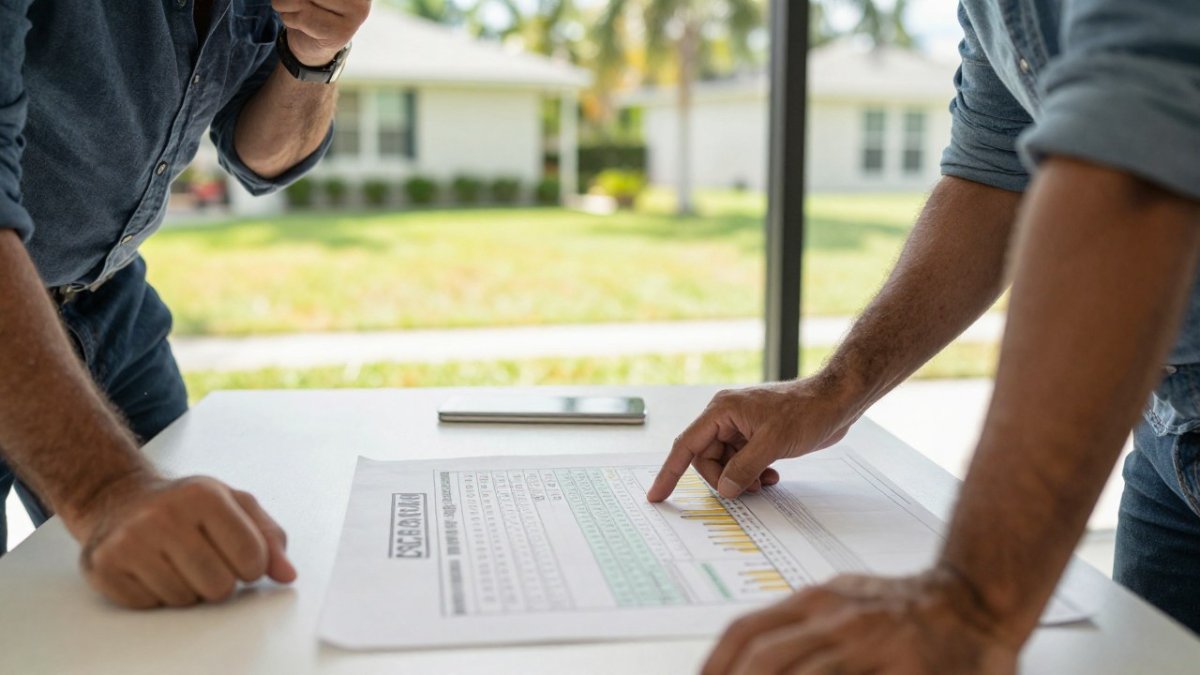
How a transparent custom home budget is built
A credible estimate is organized into cost categories, not a single lump sum. Ask any builder to break the budget into these buckets and to show the assumptions behind each:
- Land and site work: clearing, fill, soil correction, drainage, retaining, utility taps, and driveway.
- Hard costs: foundation, framing, roofing, windows and doors, envelope, mechanical, electrical, plumbing, insulation, drywall, and finishes.
- Soft costs: design, engineering, surveys, permit fees, impact fees, and inspection-related costs.
A common pattern is that allowances and contingency are the two lines clients underestimate. Allowances are placeholders for choices you have not made yet; if your selections exceed them, the difference is a change order. Contingency is money set aside for conditions nobody could see at contract signing, such as unexpected soil conditions or a code requirement triggered during plan review.
What pushes a Miami budget up
Several factors commonly move the number:
- Site preparation, including fill, soil conditions, and drainage
- Foundation type required by the lot and local engineering
- Wind-rated windows, doors, and roofing components
- Flood-related elevation and related structural work
A clear estimate separates these categories. Vague lump-sum numbers make it hard to know where money is going, and they make change orders harder to challenge later.
Reading an estimate before you compare builders
When you put two bids side by side, compare them line by line rather than by total. Confirm that both include the same scope, the same allowance amounts, and the same contingency. A lower total often reflects a smaller allowance package or an omitted scope item, not a better price. Ask each builder to state what is excluded, and get that in writing.
Coastal site, flood elevation and wind-rated requirements
Coastal and waterfront lots in Miami-Dade often carry requirements that inland lots do not. Flood elevation rules and wind-load standards can change the foundation, framing, and envelope significantly. Renovation-scale work carries its own scoping questions, and how Miami office renovations are scoped and handled shows what a proper plan includes.
The budget breaks into distinct categories, and each one can move the total.
| Budget category | What it covers | Why it matters |
|---|---|---|
| Land and site work | Clearing, fill, soil correction, drainage, utility taps | Site conditions can raise costs early |
| Hard costs | Foundation, framing, envelope, systems, finishes | Bulk of the build spend |
| Soft costs | Design, engineering, surveys, permit and impact fees | Often underestimated in early bids |
| Allowances | Placeholders for selections not yet made | Overruns become change orders |
| Contingency | Reserve for unknown conditions | Kept separate from allowances |
| Builder fee and overhead | How the builder is paid | Should be stated openly |
Custom Home Construction Timeline From Permit to Final Inspection
A custom home build generally moves through design, permitting, site work, structure, systems, finishes, and final inspection. Permit review and inspection scheduling are often the longest unpredictable phases, so the overall timeline depends heavily on local approvals and the complexity of the design. What most builder pages omit is the sequence itself, which phase depends on which approval, and where a schedule realistically slips.
Phase-by-phase sequence
A typical custom build follows this order. Durations vary by scope and jurisdiction, so treat this as a sequence rather than a calendar.
- Preconstruction and design: schematic design, selections, engineering, and a buildable set of drawings. Decisions made here set the pace for everything after.
- Permitting and plan review: submittal to the local building department, plan review comments, revisions, and permit issuance. This is the phase most often outside the builder's direct control.
- Site work and foundation: clearing, grading, utilities, and foundation construction, followed by foundation inspection.
- Structure and envelope: framing, roofing, windows and doors, and weatherproofing, with framing and envelope inspections along the way.
- Systems rough-in: mechanical, electrical, and plumbing installed and inspected before walls close.
- Insulation and drywall: insulation inspection, then drywall, taping, and finish.
- Finishes: cabinetry, tile, flooring, trim, paint, fixtures, and appliances.
- Final inspections and certificate of occupancy: the last inspections and the sign-off that allows occupancy.
Inspections must pass before work proceeds to the next stage.
Where schedules actually slip
Most schedules slip in the same places: late design changes, material lead times, and waiting for inspections. A reliable builder will give you a milestone schedule that shows these phases and identifies which ones depend on outside approvals. Treat any single completion date with caution until permits are issued.
A useful habit is to ask for the schedule in two layers: the milestone dates the builder controls, and the approval-dependent dates the builder does not. That separation tells you where your own decisions have the most leverage, usually design freeze and selections, because late changes ripple into permitting and material orders.
Questions to Ask a Custom Home Builder Before You Hire
Before you sign, a few direct questions reveal a great deal about a builder:
- Are you properly licensed for the work on my project, and can I verify your license?
- Who will manage my project day to day, and how often will I receive updates?
- How do you handle change orders, and how will I approve costs before they are added?
- Do you carry general liability and workers' compensation insurance?
- Can you provide references from completed projects of similar size and location?
- How do you handle permitting, and who is responsible if an inspection fails?
Strong builders answer these clearly and put the answers in writing. Hesitation on any of them is worth noting.
Custom Home Builder Contract Checklist and Your Next Step
Review the contract carefully before signing. Confirm the scope of work, payment schedule, change order process, warranty terms, and the schedule milestones.
Dorris Construction Management offers full-service construction and remodeling for residential and commercial properties in Miami, Florida, with licensed trades and project management from start to finish. If you are planning a custom home in Miami, contact Dorris Construction Management to discuss your project and request a written estimate.
Frequently Asked Questions
How do I choose a custom home builder in Miami?
Start by confirming the builder holds active Florida licenses for the trades involved, such as a general contractor license and any specialty licenses for roofing, plumbing or pools. Ask whether the company carries liability and workers' compensation insurance. Compare at least three written proposals line by line, looking at scope, allowances, change order policy and payment schedule. Visit a finished project if possible, and verify licenses through the Florida Department of Business and Professional Regulation before signing anything.
How much does it cost to build a custom home in Miami?
Costs vary widely with lot conditions, finish level, square footage and design complexity, so no single figure applies to every project. Coastal lots often add cost for deep foundations, flood-elevation requirements and wind-rated windows and roofing. Ask each builder for an itemized estimate that separates site work, structure, mechanical systems and finishes, and request a stated allowance for each finish category. Pricing depends on design choices, material availability and permit requirements, so contact Dorris Construction Management directly for a current quote tailored to your project.
How long does it take to build a custom home in Miami?
Timelines are driven mostly by design approval, permitting and inspections, which often take longer than the physical build itself. Design and preconstruction planning can run several months before a permit is issued, and plan review timelines depend on the jurisdiction and the completeness of your submittal. Ask the builder for a milestone schedule that lists permit submittal, permit issuance, foundation, dry-in, rough-in inspections and final certificate of occupancy, with a realistic buffer for weather and material lead times.
What should I ask a custom home builder before hiring them?
Ask who will manage your project day to day and how often you will receive updates. Ask who holds the license for each trade, and ask how the builder handles change orders, unexpected site conditions and disputes. Find out how payments are scheduled and what warranties apply after completion.